Protecting the brand on social media: practical guide to defend against attacks
Learn how to defend your brand from fake profiles and scam attempts on social media. A practical guide to protect your reputation and your customers.
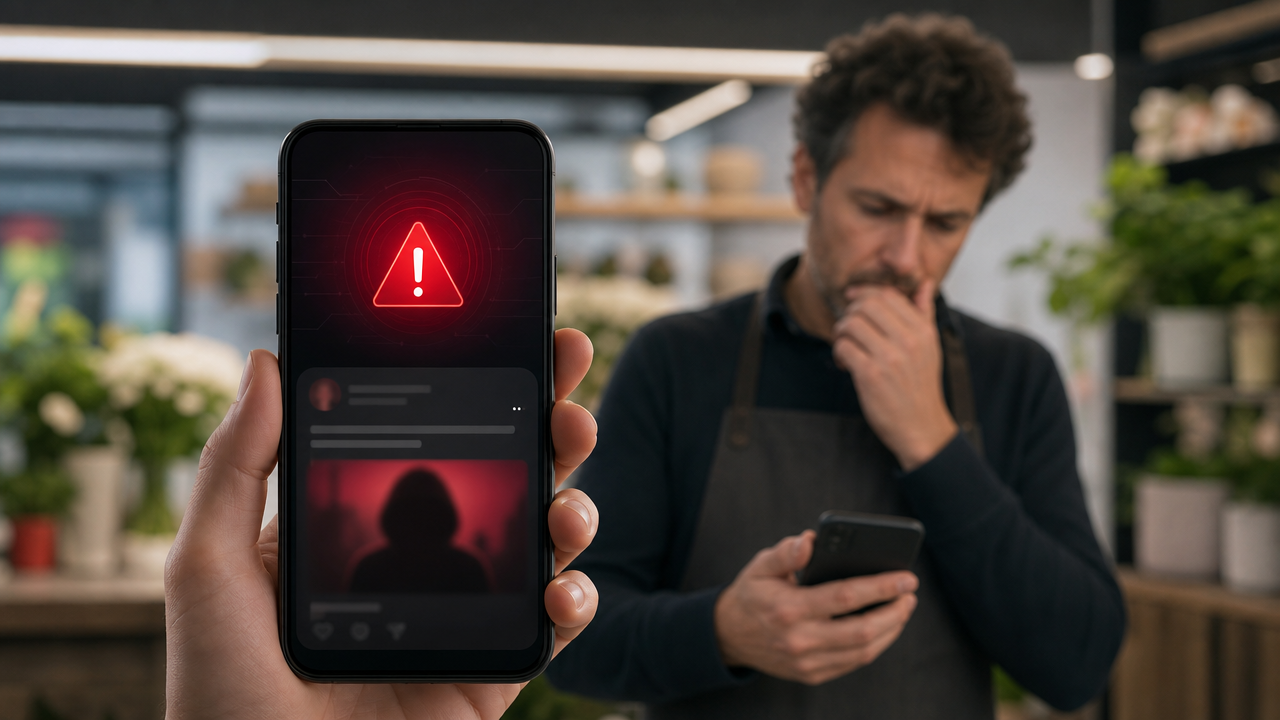
You had a Facebook page that worked well. A few customers would write in, ask for hours, leave a review. Then, one Wednesday morning, you open the app and find 15 angry messages. A profile with the same logo as yours, but with a slightly different "@," is responding to your customers: promising discounts and asking for immediate payment via PayPal. It's not a movie. It's called brand hijacking, and it happens more often than you think. See how to protect yourself without having to become a cybersecurity expert.
What it really means to protect your brand on social media.
Protecting the brand is not about registering the logo and hoping no one copies it. It is the set of concrete actions you take so that your business' reputation is not damaged by fake profiles, defamatory comments, or attempts to scam your customers. It is a matter of identity and economic value. As an in-depth TechBusiness article explains, brand protection defends just that: who you are and what you are worth in the eyes of those who choose you. Imagine discovering that a clone profile is asking for wire transfers from your contacts: the damage is not only to your turnover, but to the trust built over years of work. A well-made fake profile can wipe it out in 48 hours.
How to recognize digital identity theft.
The signs are less obvious than you think. The fake profile uses your logo, copies your bio, and it all looks authentic. Then you look closer: the username has an extra dash, a dot, a letter swapped out. "MarioRossi_Consultant" instead of "MarioRossi.Consultant." Here's what's worth checking every week:
- Random negative reviews, all with the same tone or similar grammatical errors.
- A follower who contacts you saying, "But did you already write me yesterday from another account?"
- Customers who receive private messages with requests for passwords or advance payments.
According to a European survey cited by Kaspersky, about half of shoppers stop using a service after a negative experience related to brand imitation attempts. This is not a reassuring statistic for a business that thrives on word of mouth.
What tools to use to monitor reputation.
You don't need expensive software. Start with three tools you can turn on this afternoon.
- Google Alerts: it's free. Enter your brand name and get an email every time someone mentions it online, so you can find out right away if your name appears on suspicious sites.
- Canva: add a semi-transparent watermark to images you post. It doesn't block determined theft, but it makes it more complicated to clone your official materials.
- A tool to centralize communications: when you manage so many messages on multiple channels, the risk of overlooking a customer reporting a fake profile is high. Leader24 helps keep everything in order and qualify each request, preventing people from being hooked by copycats.
How to deal with fake reviews and negative comments.
Deleting everything instinctively is the most common mistake, and it usually makes things worse. Transparency works better. Respond to the comment calmly and publicly, "We are sorry for what was reported, we cannot find a match in our records. Please write to us privately to discuss further." If the review is blatantly false, use the platform's reporting tools, because Meta, Google and LinkedIn have specific forms. Reporting right away, citing the platform's guidelines, increases the chances of removal. Keep a file with screenshots of each suspicious review and how you responded. If the problem escalates, you already have documentation ready for possible legal action.
Privacy and data: how to protect customers from scammers.
Customer data is a legal obligation before it is a courtesy. Never ask for passwords, access codes or payment details via social chat. A good habit is to publish a post set at the top of the page where you explain what your official channels are and what you will never ask for via message. For up-to-date regulations, you can refer to the Privacy Guarantor's guidance, which is available on the institutional website. Letting clients know that you care about their security is a definite benefit, especially if you operate in sensitive industries such as medical practices or professional services.
What to do when you discover a fake profile.
Speed is everything. The longer you leave that profile active, the more people might fall for it. Here's what to do within an hour of discovery.
- Take screenshots of everything: profile, posts, messages, follower list.
- Report the profile to the platform immediately. Instagram, Facebook and LinkedIn have "impersonation" forms: describe in a few sentences who you are and why that profile is fake.
- Post a notice on your official channels, "Warning: this profile is NOT maintained by us. Ignore messages you receive from that account and report it to us."
- If the damage is significant, contact a specialized attorney. Brand hijacking cases can have significant economic consequences, and a professional assessment is needed.
The brand check-up you can do today.
You don't need to wait for an attack to start protecting yourself. The first step is a quick check-up that takes less than twenty minutes. Open Google and type the exact name of your business in quotes, then scroll through the top results. After that, open Instagram, Facebook and LinkedIn by searching for the same name: look at the profiles that pop up and see if someone is using your logo without belonging to you, or if there is an account with a very similar name. If you find something suspicious, report it immediately. Protecting the brand is not a project to be put off until next month. It is a routine check, like checking your bank statement or backing up your files. The more visible your business is, the more exposed it is, and keeping it clean of imitations is the most effective way to defend the work you've built.
Frequently asked questions.
How do I know if a fake profile is really doing damage?
Check to see if messages are coming in from confused customers, if negative reviews are multiplying for no reason, or if someone reports strange requests made on your behalf. A customer who says "but you already wrote me yesterday" is the clearest red flag.
Can I defend myself without a lawyer?
In most cases, yes. Reporting to social platforms solves many problems, especially if you act quickly. The lawyer is needed when the damage is economic or the platform does not take action despite repeated reporting.
Is it worth relying on an agency for brand protection?
It depends on the complexity of the problem. For local businesses with an average digital presence, free tools and a weekly checkup are enough. If you run a very active e-commerce or are a public figure, professional support may be a sensible investment.
Partner resources
On this topic, it can also be useful to look at the work of publishing partners with complementary experience (Creative Studio for branding, design and digital communication):
Leader24 insights
If you would like to learn more about how Leader24 approaches the topics covered, these are the starting resources:
Ready to transform your customer service?
Activate your AI assistant on WhatsApp in 5 minutes. 30-day free trial, no credit card required.
Fonti
Related articles
Telegram per lavoro: come proteggere documenti e chat aziendali
Usi Telegram per scambiare documenti con i clienti? Scopri come attivare le chat segrete, la verifica in due passaggi e gestire la sicurezza dei tuoi dati.

Perché il rallentamento dell'IA è un vantaggio per la tua azienda
I colossi tech rallentano lo sviluppo dell'IA: scopri perché questa prudenza rende i tuoi strumenti di automazione più stabili, sicuri e professionali.
Come semplificare il lavoro automatizzando i processi aziendali
Scopri come integrare i tuoi strumenti di lavoro, automatizzare le attività ripetitive e centralizzare le informazioni per eliminare il caos quotidiano.