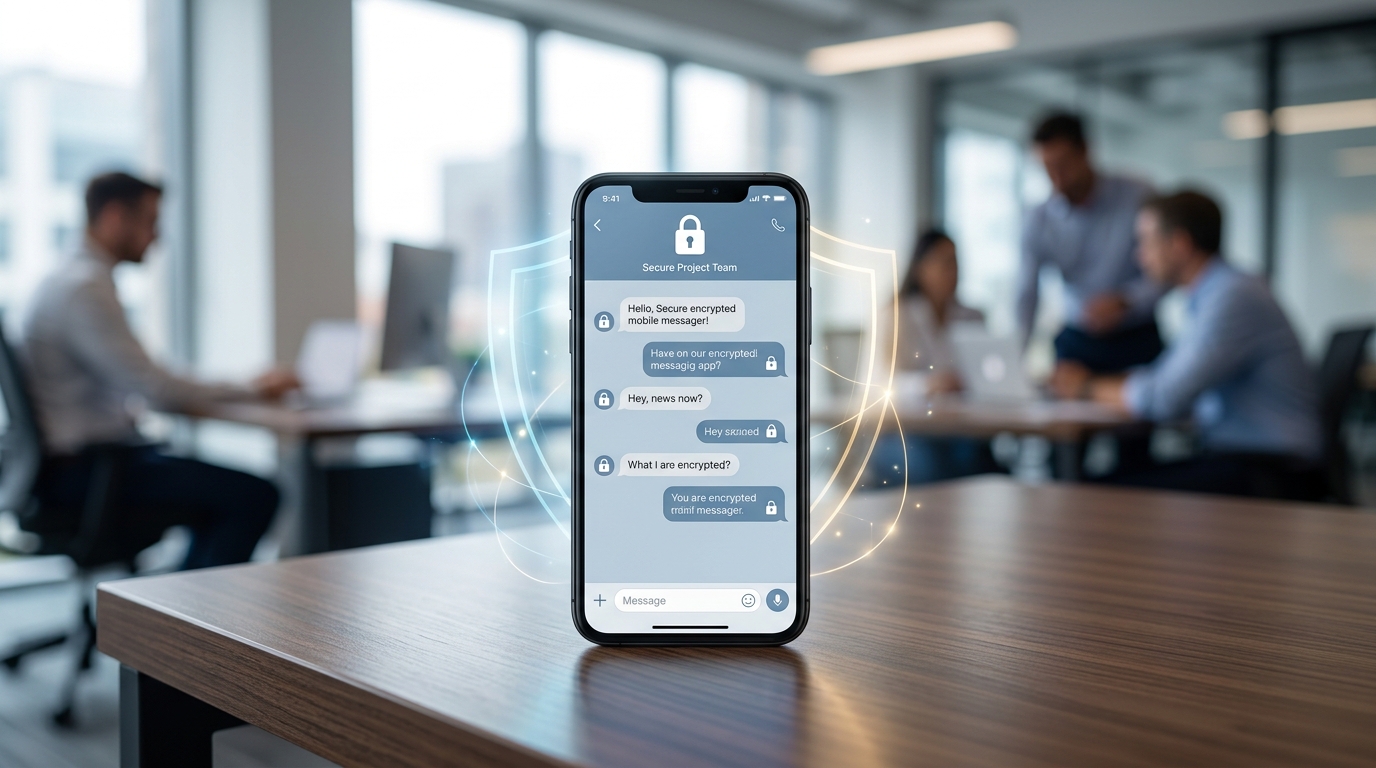
Online privacy: why security is your best competitive advantage
Online privacy is not just a legal requirement, but a powerful marketing tool. Learn how to protect customer data to build trust and sales.
Imagine you run a financial advisory firm or a niche e-commerce business. A potential client writes you on WhatsApp, "How do you guarantee the confidentiality of my data?" If you answer clearly and reassuringly, you've already done half the work of winning him over. If you falter, you risk losing him before you even submit a quote. Online privacy is no longer a bureaucratic chore to be endured, but a real calling card. In a market where trust is in short supply, demonstrating that you know how to protect client information sets you apart from the crowd and makes you perceived as a serious professional.
Why has online privacy become your best calling card?
When a customer entrusts you with their data, they are handing over a piece of their digital life. Knowing that that information will not be exploited by a third party allows them to interact with you without the constant fear of receiving spam or experiencing identity theft. It is no coincidence that many consumers today also choose a vendor based on the transparency with which it handles privacy.
For you, this translates into a concrete competitive advantage. A reassured customer is more likely to share useful information, preferences, budgets, specific needs, enabling you to offer a tailored service, close more contracts and build loyalty over time. In practice, protecting data is not a cost: it is an investment that generates stronger relationships and smoother sales.
What does the law say (without technical complications)?
The European regulatory framework, built around GDPR, guarantees a high level of online privacy for all citizens. You don't need a lawyer to understand the spirit of it: the law asks you to process personal data lawfully, fairly and transparently, while giving you a set of rights to enforce.
Basically, every person has the right to access, correct, transfer or request deletion of their data. For a business owner, complying with these rules means more than just avoiding penalties. It means being able to tell a customer, "Your data is safe, and if you want I can show you how we handle it or delete it at any time." Such a sentence, said with knowledge, is worth more than a thousand marketing campaigns.
How to protect communications with your customers?
The first line of defense is awareness, followed by tools that make conversations unreadable to prying eyes. You don't need IT skills: all it takes are a few good habits.
- Use encrypted connections. Whenever you browse or exchange data, make sure the site address starts with HTTPS and the padlock appears in the browser. This simple measure prevents third parties from intercepting information traveling between you and the client.
- Enable two-factor authentication (2FA). On every business account, email, CRM, social, set up two-step verification. Even if an attacker steals your password, without the second code generated by your phone, he or she cannot get in. Activating it takes very little time and shields you from most abusive access.
- Centralize conversations in a secure environment. Instead of managing customer messages on messy, personal channels, choose platforms that offer encryption and access control. This way you prevent sensitive information from ending up on unsecured devices or in private chats.
What are the real risks if you neglect security?
Neglecting data protection doesn't just mean exposing yourself to fines. It means opening the door to scams, spyware and privacy breaches that can affect your business in very real ways. Unauthorized access to your customer database can result in contact theft, ransom demands or image damage that is difficult to repair.
The most serious damage, however, is often reputational. Customers trust you as long as they perceive that you treat their data as carefully as you would your own. It only takes one report of an information leak to sour a relationship built over years. This is why security is, after all, a matter of dignity and freedom in doing business: it allows you to work without the anxiety of constantly being under attack and to present yourself to the market as a reliable point of reference.
How to simplify privacy management without going crazy?
You don't have to become a cybersecurity expert to sleep soundly. The key is to reduce the number of tools that handle sensitive data and choose solutions that integrate protection by design.
When you use ten different software to manage leads, invoices, emails and chats, you multiply the points at which a piece of data can be exposed or lost. In contrast, platforms that bring everything together in one environment allow you to keep track of the entire flow of information, reducing the risk of human error and simplifying consent management. Fewer data passes between tools mean fewer potential leaks and more time to spend on your real work.
The first practical step you can take today.
You don't need a revolution: two targeted actions are all it takes to immediately raise the level of protection for your business.
- Check your accounts. Check which software you use daily-email, CRM, social, messaging tools-and make sure two-factor authentication is enabled on each. If it's missing, activate it now-it takes very little per account.
- Publish a clear disclosure statement. Write in plain Italian how you treat customer data, for what purposes, and how they can ask you to change or delete it. Put it prominently on your site: transparency is the first brick of trust.
If you want to experiment with a more structured way to securely manage customer communications, you can start with a 30-day free trial of Leader24, a platform that centralizes conversations while maintaining high standards of data protection, so you can test firsthand how your daily workflow changes.
Frequently asked questions.
Is online privacy an issue only for large companies?
No, indeed. Small businesses are often easier targets because they have fewer resources to devote to cybersecurity. A successful attack can have proportionately more devastating consequences because reputation is based on direct trust relationships with a few customers.
What do I risk if I do not comply with GDPR?
In addition to financial penalties, you risk losing customers and damaging your image. GDPR is not an enemy: applying it helps you get your internal processes in order and demonstrate professionalism. Starting with small steps-clear disclosure, minimal data collection, consent management-is already a great place to start.
How can I demonstrate to my clients that their data is safe?
Be transparent. Explain in a simple way what data you collect, why you need it, and how long you keep it. Show that you have taken measures such as encrypting communications and two-factor authentication. If a customer asks you for information, answer competently and without mincing words-that's the best way to build trust.
Do I have to use complicated software to be compliant?
No. There are solutions designed for those without an IT department that integrate data protection almost invisibly. The important thing is to choose reliable tools, keep them up to date, and also train employees on basic best practices.
Insights Leader24
If you want to learn more about how Leader24 addresses the issues, these are the starting resources:
Ready to transform your customer service?
Activate your AI assistant on WhatsApp in 5 minutes. 30-day free trial, no credit card required.
Fonti
Related articles

Perché il rallentamento dell'IA è un vantaggio per la tua azienda
I colossi tech rallentano lo sviluppo dell'IA: scopri perché questa prudenza rende i tuoi strumenti di automazione più stabili, sicuri e professionali.

Come semplificare il lavoro automatizzando i processi aziendali
Scopri come integrare i tuoi strumenti di lavoro, automatizzare le attività ripetitive e centralizzare le informazioni per eliminare il caos quotidiano.

Smart TVs in the Office: How to Protect Your Customers' Privacy
A Smart TV in the waiting room can compromise data security. Learn how to set up your devices correctly and protect your practice's network.