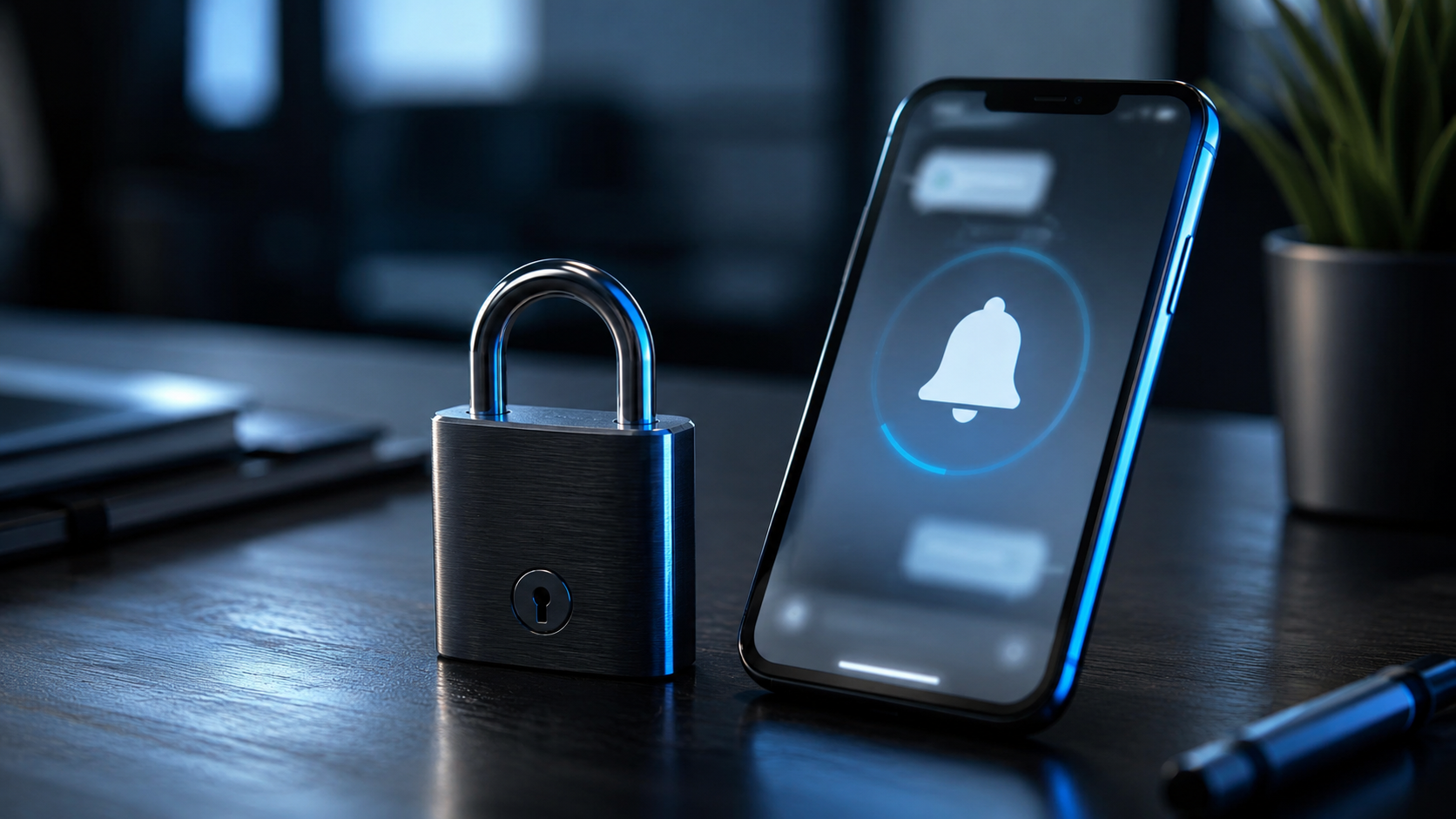
Synthetic Threats: How to Protect Your Business from AI Fraud
Find out how synthetic threats use artificial intelligence to deceive professionals and businesses. Protect yourself with practical, simple strategies.
You know when you get an email from your accountant asking you to check an urgent invoice? The tone is his usual one, the subject line seems perfectly normal, and there’s a link at the bottom. In that moment of distraction—before a coffee break or between clients—you might click on it without thinking twice. Too bad your accountant didn’t actually send anything. Behind that message is an artificial intelligence that has studied their writing style and replicated it with precision. This isn’t a movie: it’s happening today in our offices and businesses. And you don’t need to be an IT expert to protect yourself.
What Are “Synthetic Threats” and Why Should You Be Concerned?
Synthetic threats are attempts at digital fraud in which artificial intelligence impersonates someone you trust. It could be a vendor, a colleague, or even a government agency. The AI clones the tone of voice, the email format, and sometimes even the audio. According to Prothect, by 2026, attackers will use deepfake audio to impersonate executives or send BEC (Business Email Compromise) messages that mimic the writing style of your contacts.
The damage to your business is twofold. On the one hand, you risk paying a fake invoice or sending sensitive data to a criminal. On the other hand, if a customer receives a fraudulent message sent in your name, the trust you’ve built over years of work can be shattered in an instant. Rebuilding that trust costs far more than any security software.
How to Recognize an Attempt at Digital Fraud
The first red flag is psychological pressure. Fraudulent messages play on a sense of urgency: “Update your SPID immediately or you’ll lose access,” “Verify this document within an hour,” “Your account will be suspended at noon.” Confindustria Toscana Centro Costa reports that in recent months there has been an increase in fake communications impersonating the Italian Revenue Agency with non-existent IRPEF tax refunds, or local health authorities (ASL) with requests for payment for medical reports and copayments.
The rule is simple and requires no technical expertise. If you receive an unusual and urgent request, do not click on any links. Call the sender directly using the number you already have in your contacts, not the one provided in the suspicious message. Ten seconds to verify can save you months of trouble.
What Tools to Use for Effective Protection
You don’t need a large corporate budget. Three practical steps are enough to boost your security.
Two-factor authentication (2FA). Enable it on every business account: email, banking, social media, and management systems. It’s not just a code to enter. It’s a barrier that blocks access for anyone who has stolen your password but doesn’t have your phone. Apps like Google Authenticator or Authy are free and can be set up in just a few minutes.
Up-to-date security software. Not that old antivirus program you forgot about years ago. As reported by AvvocatoFlash, companies should adopt next-generation firewalls (NGFW) and intrusion detection systems (IDS/IPS) that filter out suspicious traffic before it enters your network. If you run a professional practice with three computers and a server, an up-to-date firewall is an investment that pays for itself the first time it stops an attack. Ask your trusted IT technician to check what you have installed and whether it’s active.
Centralize communications. The more channels you keep open, the more vulnerabilities can arise. Email, personal WhatsApp, Facebook Messenger, text messages: every tool is a gateway for scammers. Reduce the chaos by using as few channels as possible and keeping them under control in an organized manner.
How to Protect Communication with Your Clients
Your clients are your most valuable asset. If they receive a fake message that appears to come from you, your reputation takes a direct hit. The most effective strategy is proactive transparency: always clearly communicate which channels are your official ones.
If you use WhatsApp for support, make sure it’s a verified business account, not just a private number. If you have a website, clearly state in a visible location which contact details you use and which you will never use. A platform like Leader24 helps you manage all customer conversations from a single location, maintaining consistency and control over what’s communicated in your name. This prevents customers from being directed to unofficial channels and reduces the risk of someone impersonating you.
Security as an Ongoing Process, Not a One-Time Event
There’s no such thing as software you can install and be done with forever. CMI Magazine puts it clearly: security must become an ongoing function, integrated into operational processes. This means it should be cultivated through small daily habits, not through one-time, extraordinary measures once a year.
Create a security checklist for your team—even if that team consists of just you and a part-time employee. Always check the sender’s email address, not just the display name. Don’t download attachments from unsolicited communications. Teach everyone—from interns to partners—to immediately report any “strange” messages without hesitation: better ten false alarms than a successful attack.
The First Step to Get Started Today
Don’t try to revolutionize everything overnight. Cybersecurity isn’t a project you can complete in a week. It’s a marathon made up of small, consistent habits.
Spend 30 minutes today on just one thing: set up two-factor authentication on all your main accounts. Email, online banking, corporate social media, and business management systems. Start with the most critical ones. Once it’s enabled, you’ll sleep more soundly knowing that even if someone steals your password, they’ll never gain access without your phone. It’s the most concrete and immediate step you can take for your business. And it costs nothing.
Frequently Asked Questions
Do I really need to worry if my business is small?
Yes. Criminals specifically target small businesses because they know they have fewer defenses. They don’t need millions—just a few hundred euros per victim, multiplied by a hundred professional firms.
Does two-factor authentication slow down daily work?
At first, it might seem like a hassle. After a week, it becomes second nature, like buckling your seatbelt in the car. The five seconds you lose are infinitely worth more than the risk you run without it.
What should
I do if I’ve already clicked on a suspicious link?
Immediately disconnect the device from the network, contact your trusted IT specialist, and change the password for the affected account right away from another device. Then monitor the account over the next few days for any unusual activity.
Leader24 Insights
If you’d like to learn more about how Leader24 addresses the topics covered, here are some resources to get you started:
Article written with the help of AI.
Ready to transform your customer service?
Activate your AI assistant on WhatsApp in 5 minutes. 30-day free trial, no credit card required.
Fonti
Related articles

Marketing per piccole imprese: perché non serve un testimonial
Scopri perché per una piccola impresa la fiducia dei clienti conta più di un volto noto e come costruire una strategia basata sull'ascolto e l'autenticità.
How to Automate Business Processes Without Writing Code
Learn how to design efficient business workflows and automate repetitive tasks using no-code tools, without having to code.

Learn how to adapt the tourism industry to climate change
The weather affects bookings. Find out how to adjust your offerings for different seasons, manage requests, and turn the weather into a competitive advantage.