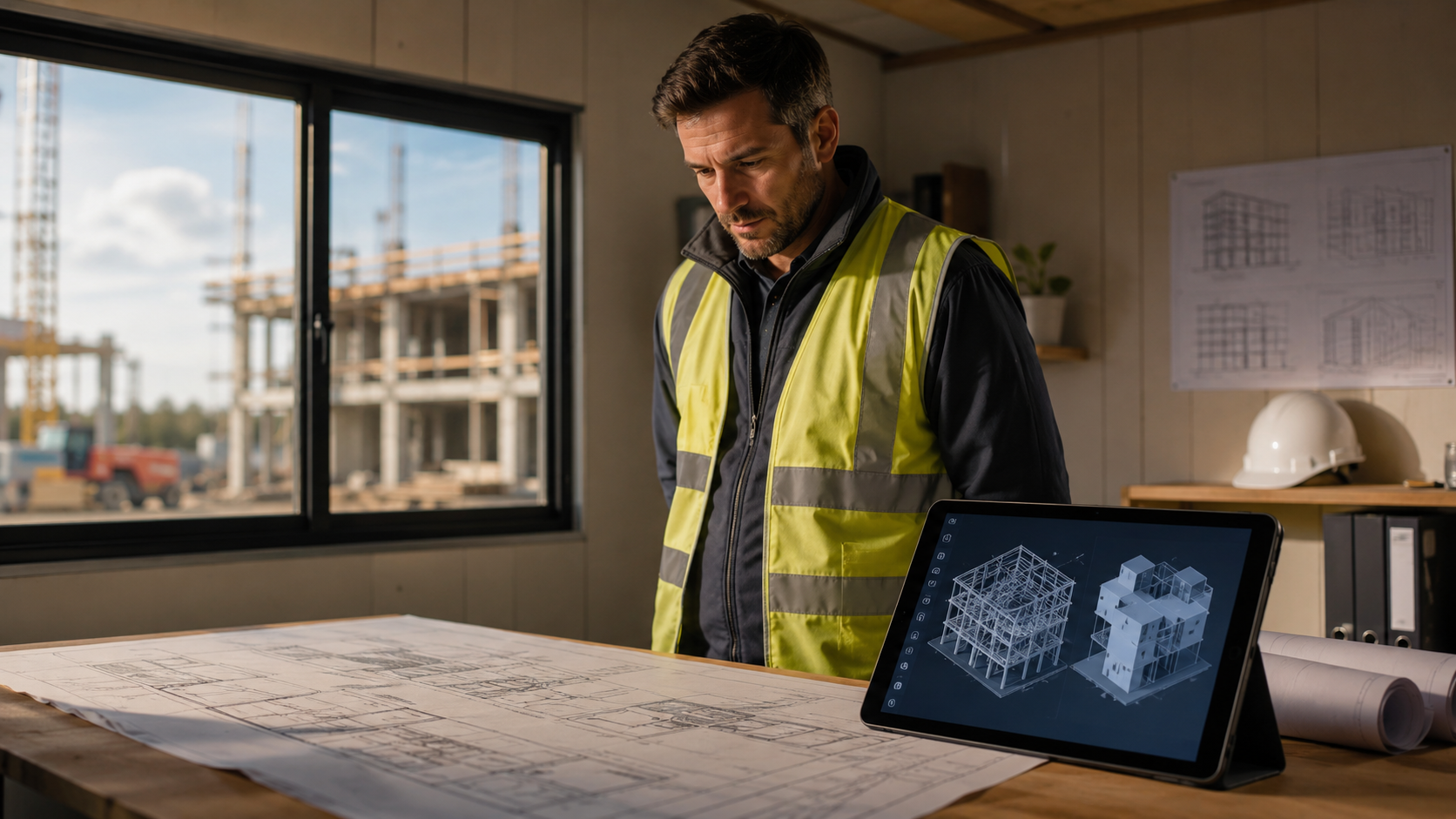
Construction 4.0: How to Use AI to Manage Construction Sites and Bureaucracy
Find out how artificial intelligence and digitalization can help you reduce delays on construction sites, streamline bureaucracy, and manage clients.
You’re at the construction site at 8:15 a.m. when the supplier calls to say the materials will be two days late. At the same time, the client messages you on WhatsApp to request yet another change, while five administrative tasks are waiting for you in the office—and you already know the day will end at 8:00 p.m. Constantly rushing and playing catch-up becomes the norm, but artificial intelligence today isn’t just for sci-fi calculations—it’s designed to break this cycle. It can transform chaos into a smooth-running process, without making you feel crushed between the construction site and the paperwork.
Why Predictive Models Are Changing Construction Site Work
Predictive models analyze data from your past projects and tell you what will happen tomorrow, not what happened yesterday. Instead of reacting to problems once they’re already obvious, you can anticipate them well in advance. An AI system cross-references schedules, material supplies, and labor availability, then suggests the most effective sequence to avoid bottlenecks. This isn’t just abstract theory. Pilot studies show delays reduced by up to 20% thanks to predictive models and automated scheduling. In practice, on a six-month project, you recoup more than a month of downtime—time you currently lose to waiting, realignments, and constant phone calls to suppliers.
How to Streamline Bureaucracy with New Digital Systems
Construction bureaucracy remains the real roadblock for those working in the field. Every application requires different documents, and every office has its own rules, so the transition from paper to digital is more than just a convenience. It’s the only way to avoid drowning in chaos. The Emilia-Romagna Digital Agenda 2026–2029 calls for a unified system of digital services to streamline the relationship between professionals and the public administration. The goal is to centralize project data in a single location, so that information flows without duplication, reducing wait times and human error. If your region doesn’t yet have a similar agenda, the trend is clear: the digitization of paperwork is coming everywhere. Preparing now means being ready when the system goes live.
Handling Client Requests Without Wasting Time in the Office
Communication is the most critical part of the entire day. Clients ask for updates on the status of work or new quotes right when you’re on a site visit, and WhatsApp messages sit unanswered for hours. You can’t be everywhere at once. Every unanswered request becomes a risk, because the customer feels neglected and might look for another professional. Conversation automation addresses this very need. If you want to centralize requests coming in from your website or WhatsApp without having to personally reply to every message, Leader24 lets you qualify leads and manage support automatically, freeing you up to focus on the job site.
What Tools to Use to Start Digitizing Your Workflow
There’s no need to overhaul everything right away. Start with tools that solve specific problems. Project management platforms, for example, display progress milestones and assign clear tasks to the team. They don’t require complex setups: all you need is a shared digital whiteboard where everyone can see what needs to be done today and update the status in real time. Document management software keeps project data in one place, with access controls and versions that are always up to date. Any AI system that processes project information must meet the highest standards of security, compliance, and control. Conversation automation, on the other hand, allows an AI assistant to respond to customers on the website and via WhatsApp while you’re busy elsewhere, ensuring that urgent requests don’t go unanswered.
The Importance of Digital Twins for Land Monitoring
Beyond individual construction sites, the technology introduces digital twins—virtual replicas that allow for monitoring the state of the environment and hydrogeological risks even before excavation begins. The Emilia-Romagna Digital Agenda calls for the introduction of digital twins and predictive models to monitor the state of the environment and any hydrogeological risks. For a construction company, this means having precise data on soil stability, flood risk, and potential interference with existing utility networks. Data that, today, you only discover once you begin excavation—leading to costs and a chain of delays.
The First Practical Step Toward a More Streamlined Construction Industry
Don’t try to automate everything in a single day. Identify where you’re wasting the most time: is it bureaucracy, client management, or construction site planning? Choose just one process, digitize it, and evaluate the results after a month. Technology is only an ally if it’s integrated into your workflow gradually. Starting with an AI assistant that responds to clients on WhatsApp while you’re on-site is a concrete first step. It doesn’t require you to rethink your entire organization: just activate the tool, try it for 30 days, and decide if it’s right for you.
Frequently Asked Questions
Will AI replace my job as a surveyor or site manager?
No. AI handles repetitive tasks such as answering the same customer questions, cross-referencing data to predict delays, and organizing documents. You remain the key figure who makes decisions, interprets results, and manages relationships on-site. The difference is that you do so with more data at your fingertips and less time wasted.
How much does it cost to get started with these tools?
The initial cost is often zero. Many project management platforms offer free plans for small teams. AI conversation assistants start with scalable plans that include free trials. The real investment is the time you spend setting up the tool: a few hours the first week, then it runs on its own.
Do I need to be a tech expert to use them?
No. Today’s tools are designed for non-technical users. They have simple interfaces, setup wizards, and support in Italian. If you know how to use WhatsApp and an Excel spreadsheet, you can manage an AI assistant for customer communications or a digital whiteboard for project management.
There’s just one first step: identify where you’re wasting the most time and digitize that process. If it’s customer communications, set up an AI assistant today. If it’s paperwork, learn about your region’s Digital Agenda and streamline your processes. Ten minutes of setup today will save you hours tomorrow.
Leader24 Insights
If you’d like to learn more about how Leader24 addresses the topics covered, here are some resources to get you started:
Ready to transform your customer service?
Activate your AI assistant on WhatsApp in 5 minutes. 30-day free trial, no credit card required.
Fonti
Related articles

Telegram per lavoro: come proteggere documenti e chat aziendali
Usi Telegram per scambiare documenti con i clienti? Scopri come attivare le chat segrete, la verifica in due passaggi e gestire la sicurezza dei tuoi dati.

Perché il rallentamento dell'IA è un vantaggio per la tua azienda
I colossi tech rallentano lo sviluppo dell'IA: scopri perché questa prudenza rende i tuoi strumenti di automazione più stabili, sicuri e professionali.
Come semplificare il lavoro automatizzando i processi aziendali
Scopri come integrare i tuoi strumenti di lavoro, automatizzare le attività ripetitive e centralizzare le informazioni per eliminare il caos quotidiano.