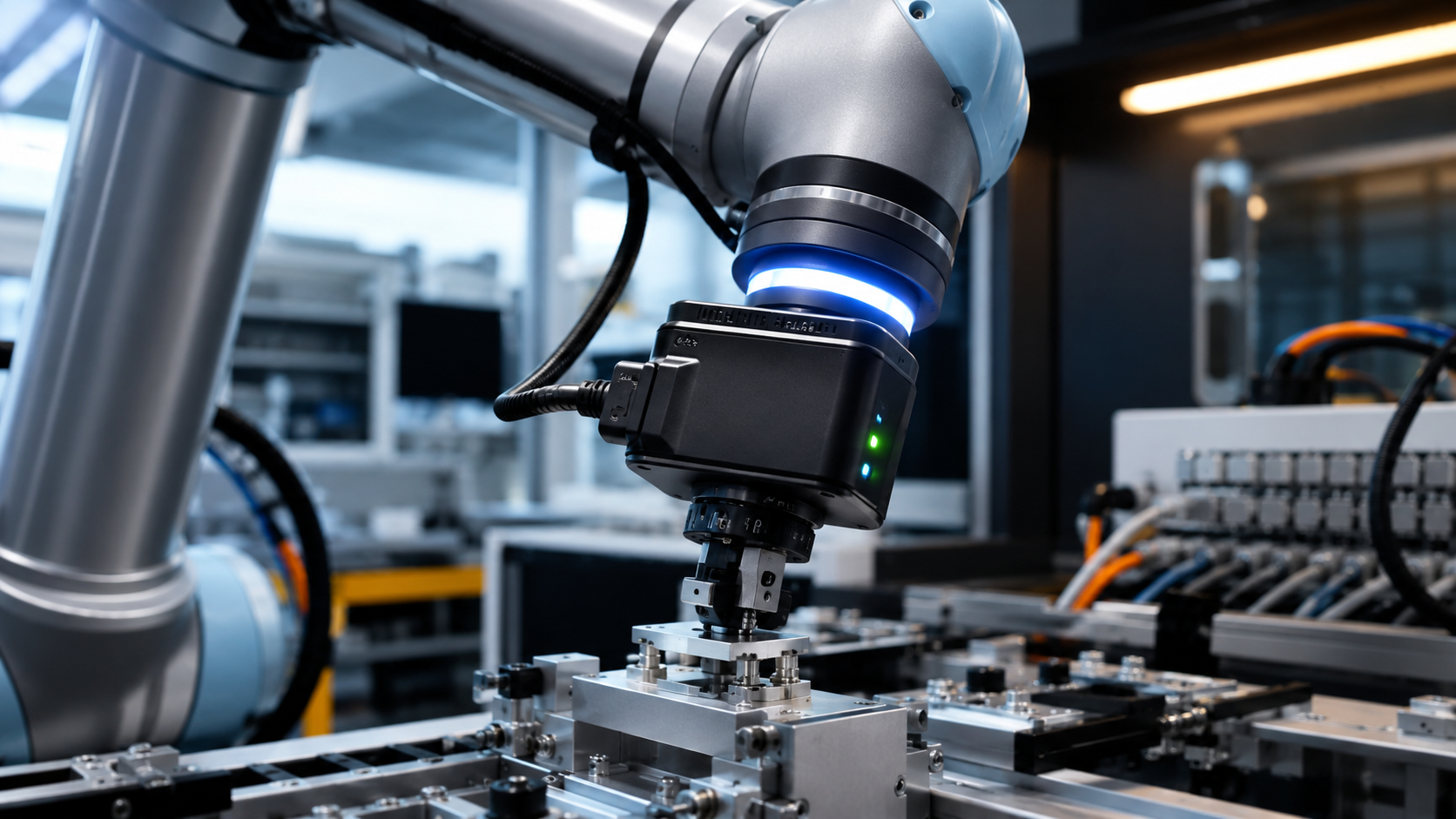
Factory Automation: How to Start Collecting Data from Machinery
Find out how to transform your workshop through data collection and predictive maintenance, starting with the machinery you already own to optimize production.
You’re looking at a machine’s monitor that’s been flashing yellow for three days. The operators tell you that it freezes up from time to time, but no one can tell you exactly when it happens, why, or how many times it’s happened in the last month. Meanwhile, the order for those 400 units is already behind schedule, and you’re proceeding without reliable data, hoping that the real problem doesn’t surface right in the middle of a shift.
Automation in the factory doesn’t start with the purchase of a new robotic arm. It begins when the machinery you use every day starts providing you with useful information about its status.
Why Data Collection Is the True Driving Force Behind Automation
A robot without data is just a piece of metal that moves. But when you connect sensors, counters, and systems that record what’s happening, it becomes a system capable of alerting you that a tool is about to fail, that the oil temperature is rising, or that cycle times are lengthening almost imperceptibly. Smart manufacturing works exactly this way: you collect and analyze production data while production is underway. Instead of intervening only when a failure is already evident, you can take action at the first faint signs. This shift moves you from reactive maintenance—where you rush to make repairs—to predictive maintenance, where you intervene before downtime occurs. For a machine shop or metalworking facility, this translates to fewer interruptions and orders delivered on time.
What “Robotics” Really Means for a Small Business
Forget the images of futuristic factories you see in promotional videos. For your business, integrating robotics means adding sensors and software to the machinery you already own, so that it can detect what’s happening and flag anomalies. Today, we’re talking about Physical AI: systems that don’t just execute commands, but detect conditions in the physical environment and suggest or carry out actions based on what they measure. Think of a robotized cell on your production line. It doesn’t just move parts from one pallet to another—it also monitors vibrations and the spindle’s power consumption. When it detects that the tool is wearing down beyond a certain threshold, it sends you an alert. This way, you can replace the component before it ruins the batch, avoiding the need to scrap material that’s already been machined.
How to Start Collecting Data Without Going Crazy
You don’t need to digitize your entire company in a single day. Just start with a specific point. The heart of data collection in production today relies on three tools that work together. An MES system shows you in real time what each machine is producing, at what speed, and with what downtime, so you avoid filling out forms and having to reconstruct the data at the end of the shift. IoT sensors are attached to existing machinery and measure vibrations, temperatures, and electricity consumption without requiring disassembly. They transmit the information via Wi-Fi or Bluetooth to a central platform. The visualization software then transforms the raw data into simple graphs that you can view on your tablet while you’re on the shop floor, without needing a technician to interpret them for you.
The Role of Training: What Your Team Needs to Learn
Technology alone isn’t enough. Your operators already know how to recognize a worn bearing by the noise it makes or an overheating engine by its smell. Tomorrow, they’ll also need to know how to read a vibration graph and understand what to do when a line exceeds a certain threshold. You don’t need to turn them into data scientists. They need to transition from a purely operational role to that of process supervisors. With hands-on courses lasting just a few hours a month, spread out over several months, they’ll learn to interpret visual data and use sensors and algorithms to improve precision and control. This way, the team becomes a driving force behind the change rather than merely enduring it.
When Production Data Meets Customer Communication
So far, you’ve been monitoring the factory. However, there’s another piece of information that travels alongside production data: the updated delivery date. If the MES alerts you that order 247 will be completed tomorrow evening instead of this morning, that change must be communicated to the customer. You can’t afford to find out about it only on Friday afternoon and then have to handle a difficult phone call over the weekend. Automating responses about order status and centralizing inquiries allows you to notify the customer without having to interrupt work on the shop floor. If you want to manage all of this without wasting precious time, Leader24 helps you keep track of conversations with customers.
What’s the first concrete step to take today?
Don’t look for the perfect solution. Look for the one that solves the most urgent problem right now. Choose the machine that’s causing you the most trouble—perhaps the one that consistently shuts down on Friday afternoons. Install a basic monitoring system, even if it’s just a parts counter with memory and a status sensor that sends notifications to your phone. Let it collect data for a week. Then look at the results: you’ll see recurring patterns, average downtime durations, and perhaps discover that the problem always occurs twenty minutes after the shift change. Only then can you decide how to proceed with the next step. You don’t need the robots you see in the videos. You need to know what’s happening right now, on the machine you already have, in the warehouse where you work every day.
Frequently Asked Questions
Do I have to replace all my machinery to start collecting data?
No. IoT sensors can be mounted on existing equipment—even older models—without having to replace them. They monitor vibrations, temperature, and electricity consumption and send the data to a platform. Start with the most critical machine and assess whether the data you obtain justifies investing in the others.
How long does it take to see the first benefits?
After one or two weeks of data collection, you’ll start to see clear patterns: recurring downtime, excessive setup times, or drops in productivity during certain shifts. Predictive maintenance takes a few months to build a historical record and set reliable alert thresholds, but the first useful insights come almost immediately.
My operators are worried: Will automation replace their jobs?
Automation doesn’t take away jobs—it shifts them. Your operators will stop performing repetitive tasks and become process supervisors. They’ll need to interpret data, manage alerts, and make quick decisions. It’s a more skilled and less physically demanding job. The key is training: if you guide them through the change, they’ll see the system as an ally rather than a competitor.
Leader24 Insights
If you’d like to learn more about how Leader24 addresses the topics covered, here are some resources to get you started:
Ready to transform your customer service?
Activate your AI assistant on WhatsApp in 5 minutes. 30-day free trial, no credit card required.
Fonti
Related articles

Smart TVs in the Office: How to Protect Your Customers' Privacy
A Smart TV in the waiting room can compromise data security. Learn how to set up your devices correctly and protect your practice's network.

How to Create Visual Workflows to Automate Your Work
Learn how to automate business processes without writing code, using visual workflows to save time and better manage your customers.

Proprietary or Open-Source Software: How to Choose the Right Solution
Is proprietary software better than open-source software? Find out how to evaluate time, costs, and expertise to choose the right technology for your business.